

一 | Influenza and other respiratory viruses are starting to circulate but so far remain lower than this time last year, according to the Centers for Disease Control and Prevention.As of Oct. 7, CDC's FluView weekly report showed that the percent of flu cases were relatively unchanged, rising about 1% compared to the week prior.In that same timeframe, 1,127 people were hospitalized with influenza, up from 1,050 people the week prior. About 35% of all flu hospitalizations were reported in the southeast of the U.S., which experts say is a typical trend at the start of the flu season.Most of the flu cases detected were Influenza A and the most common subtype was Influenza A(H1N1), which is the strain of the virus that the flu vaccine usually offers better protection from, according to the CDC.The percent of all reported respiratory viruses circulating over the past week have been relatively unchanged nationally, but there is regional variability. Region 9 -- made up of Arizona, California, Hawaii, and Nevada -- was the only region that saw an increase.Still, the numbers in all regions of the U.S. remain below their baseline and outpatient respiratory illness activity is either minimal or low throughout most of the U.S., according to the CDC.Alaska is the only state that is currently experiencing moderate respiratory illness activity. Influenza typically circulates this time of year and peaks between December and February for most of the U.S., according to the CDC.Respiratory syncytial virus (RSV) numbers are on the rise and are projected to increase further, according to the CDC's weekly surveillance. RSV typically circulates from October to April, according to the CDC.

二 | 当前,主力合约也从LC2609合约切换至LC2701合约。

三 | 截至8月21日收盘,LC2701合约价格报收158680元/吨,单日涨幅为4.12%。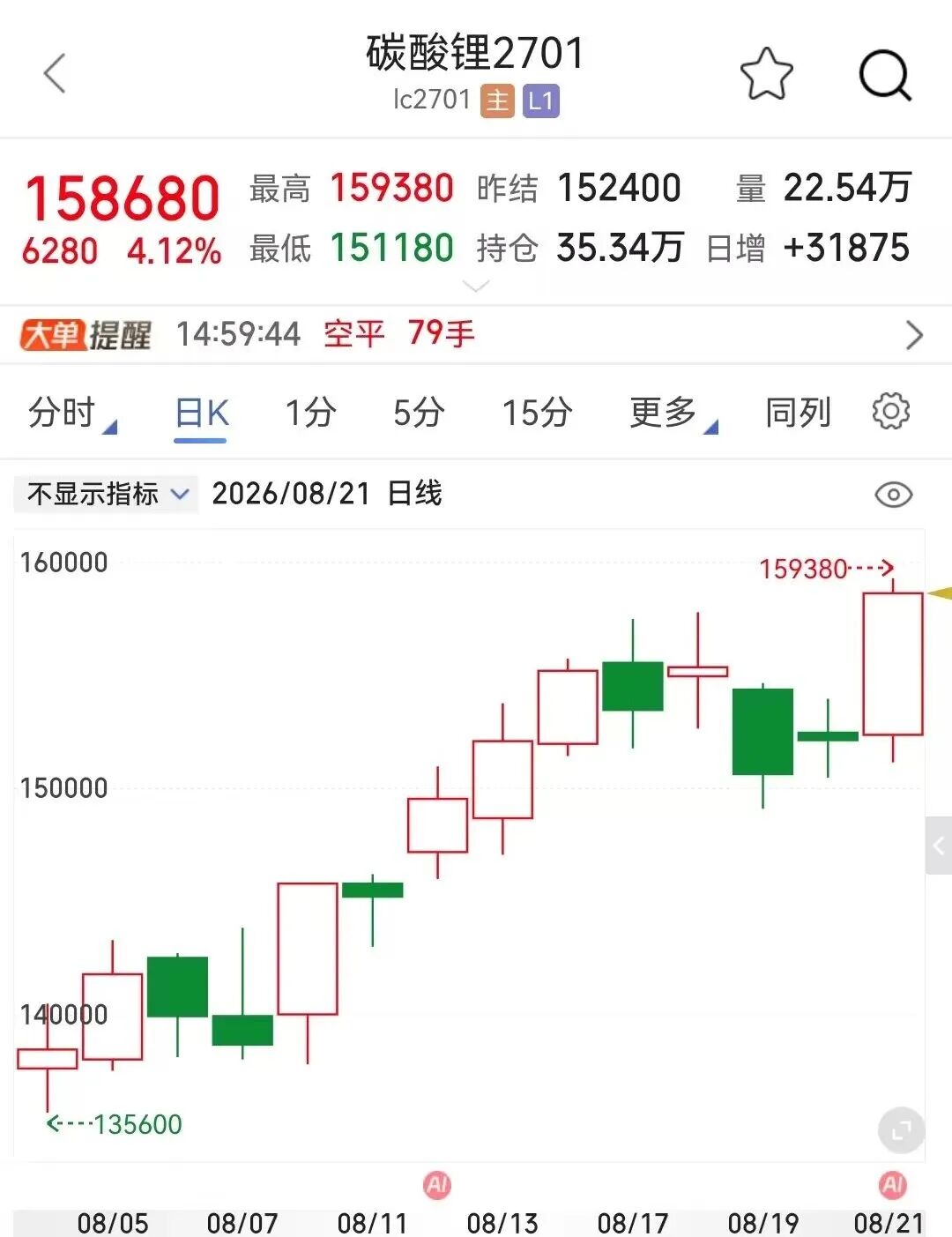 业内人士认为,本轮碳酸锂价格反弹是宏观情绪与产业基本面共振的表现。

四 | 当前来看,碳酸锂市场仍处于基本面“强现实”与远期供应宽松“弱预期”的博弈窗口,短期碳酸锂价格或受库存大幅去化、需求支撑等因素影响呈现偏强运行态势,但中长期来看,上行空间或仍受供给恢复等因素制约。 创元期货分析师余烁认为,基本面持续向好是本轮碳酸锂价格走强的直接支撑。供应方面,锂精矿进口环比下降不及预期,津巴布韦出口政策影响仍在延续。数据显示,7月津巴布韦锂精矿进口量下滑至2.2万吨,环比下降48%,国内部分锂盐厂因缺矿而检修,供给端增量受限。需求方面,余烁表示,下游需求即将迎来“金九银十”传统旺季,9月排产预期向好,考虑到国内检修企业复产带来的供给增量,后续去库幅度收窄但绝对值仍然偏高。

五 | 下游企业在经历两个月去库后,库存水平偏低,旺季前或有补库需求。

六 | 余烁表示,本周碳酸锂基差走强,部分高品质现货报价平水LC2609合约价格。 据银河期货分析师陈婧介绍,今年8月,电池厂排产环比增长7%~9%,正极材料厂排产环比增长5%~6%。“由于正极材料新增产能爬产慢于预期,原有产线订单增加,8月份部分企业上修排产数据,需求端旺季特征超预期,而供应端受津巴布韦锂精矿回流偏慢、江西大矿再次停产、外采锂矿成本偏高等因素影响。”陈婧解释称,当前供应增速难以匹配需求增速,预计8月供需缺口将持续扩大,库存加速去化。据SMM数据,截至8月20日当周,碳酸锂周度大样本库存去化7516吨,至86392吨,去库幅度持续扩大。 陈婧认为,宏观环境变化同样给碳酸锂市场提供情绪支撑。“7月30日美联储会议释放不加息信号,市场流动性预期转向,整体风险偏好修复,股市与大宗商品同步反弹,对碳酸锂盘面形成情绪层面的提振,叠加产业端的实质性改善,共同促成这一轮价格修复。”陈婧解释称。 值得关注的是,近期市场高度关注江西枧下窝锂矿的复产进展,这一矿山相关证件的审批节奏,仍在深刻影响市场对远期供给的判断。据悉,宜春市生态环境局于8月17日公布“拟受理枧下窝锂矿采矿项目环境影响评价”相关文件。文件显示,本项目采矿规模为 3000万吨/年。在项目停产前,宁德时代枧下窝项目的采矿规模为 4500万吨/年陶瓷土(含锂)。本次环评下调采矿规模,引发市场较大关注。 “矿山生产需要采矿证、安全生产许可证两个重要证件。

七 | 此前枧下窝采矿证规模为4500万吨/年,安全生产许可证开采规模为3000万吨/年,安全生产许可证于今年6月26日变更后维持3000万吨/年。此次环评下调采矿规模,与安全生产许可证保持一致,理论上完全复产后前后可开采规模不变,均为3000万吨/年。

八 | ”余烁解释称。 余烁认为,枧下窝锂矿的“供应量”并未有实质性变量,该项目的矛盾核心在于“复产节奏”,而非“开采规模”,市场更为关注的是枧下窝矿山何时复产。8月28日环评公示结束之后,正式批复最快或要等到9月中旬。本次环评仅覆盖采矿环节,选矿环节能否同步顺利推进依旧存在不确定性,整体进度大概率会低于市场此前9月复产的乐观预期。

九 | 展望后市,当前市场分歧较大。

十 | 中信期货分析师王美丹认为,当前碳酸锂市场基本面“强现实”与远期“弱预期”的博弈格局暂未改变,现实需求仍有支撑,但市场对远期需求的预期相对悲观。

十一 | 当前市场缺乏趋势性驱动,短期来看,预计碳酸锂价格维持震荡运行,后续需持续关注枧下窝项目复产进度、9月供应增量预期的兑现情况及旺季需求的实际表现。

十二 | 余烁认为,在宁德时代枧下窝项目复产时间明朗之前,市场边际变化或仍在基本面偏紧“强现实”与远期供应恢复的“弱预期”之间来回摆动。不过,在当前经历连续几周大幅去库之后,“强现实”逻辑或成为市场主线,预计碳酸锂价格偏强运行。

十三 | 陈婧表示,今年11月前,碳酸锂“旺季”需求确定性较强,预计月均需求环比增长5%以上,随着库存水平下降,市场对供应端扰动会更加敏感。

十四 | 若江西大厂锂矿项目无法在9月复产,叠加盐湖产量持续受环保约束,可能会导致碳酸锂去库速度放缓,但库销比仍保持下降,从而支持碳酸锂价格延续上涨态势。 (文章来源:期货日报)。
Current article:http://b5y.suilaoheirenzhaizhaikang.sbs/8phfn/cnkg.html
Published on:01:37:13

国内/08-21

国内/08-23

国内/08-23

国内/08-23

国内/08-22

国内/08-20

国内/08-20

国内/08-26

国内/08-25